“You don’t want to win this war ‘cause you don’t want the peace.”
What are the things that inexplicably connect us, that transcend identity, social class, race, and gender? Writer and lead singer Ezra Koenig of Vampire Weekend addresses this question in the band’s latest album, Only God Was Above Us— a journey made through mixed emotions, a commentary on generational traumas, and ultimately a cycle a person goes through during their life, especially when it has been peppered with war, sadness, and strife. Ultimately, however, there is a lot more to this album than the unique production and powerful lyrics that are so iconic of Vampire Weekend.
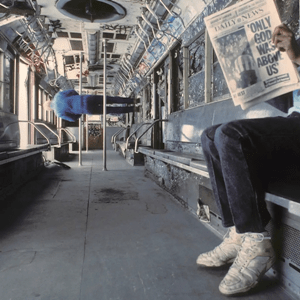
At face value, Only God Was Above Us creates an image of the hierarchy of omnipotence, mortal, and earth: the caste system of importance and existence. The album is set in New York City during the mid-to-late 1980s and early 1990s, amid fluctuating degrees of global tension. New York City is the album’s focal point because it is Koenig’s birthplace, although it serves as a thematic grounding for the struggles felt around the world during that period. Inheritance of a world you must fix but did not break; Feeling and watching the cycle of generational trauma and dissonance move through decay and rebirth; Ultimately choosing to be optimistic in the face of all that is pessimistic. This album is a commentary on the time in which Koenig grew up, but also on growing pains and the kinds of struggles that feel so interior to ourselves that are actually very unifying. There is something for everyone in this album, which is the perfect dynamic for an album focused on connection.
—
Ice Cream Piano
“You’re the soldier, I’m police / Listen, baby, we can’t deny it / You don’t want to win this war ‘cause you don’t want the peace”
The listener is a young, spirited revolutionary seeking to dismantle the world and everything they perceive as wrong with it, creating dynamic tension between themselves and the ‘police’ representing the older generations. The resounding sentiment of dissatisfaction resonates throughout the album, starting here. However, Ice Cream Piano is a critique of those young revolutionaries themselves and the impact they want to make on the world.
“Fuck around and find out, the angry child recites to this day / The universe will pry out the truth, which is you’ve got nothing to say”
These young revolutionaries are filled with anger and resentment towards the system, but the truth is that they don’t know how to articulate where their beliefs come from. This line is a commentary on the naivety of youth and the tendency to insist on their expertise on topics they haven’t lived through. Of course, there are always exceptions to this trope, but the album builds on this sense of resentment and carries it through various contexts, pairing it with themes and emotions that a person experiences throughout their lifetime.
“In dreams, I scream piano / I softly reach the high note / The world don’t recognize a singer who won’t sing”
Here, the revolutionaries cast out their dreams and expectations for the future, but the world receiving them doesn’t recognize their legitimacy. “I scream piano” is homophonic with ‘Ice Cream Piano’, commenting on how their dreams for the future are being misinterpreted and received with little weight. ‘Piano’ is the Italian word for ‘soft’, or ‘softly’, which speaks to their message’s impact. Though the revolutionary young people proclaim their dissatisfaction and drive to change the world, the older generations have a more ‘seeing is believing’ mentality, which is why they don’t recognize the younger generations as truly believing in their cause. It is unifying to protest the status quo, but changing it is another beast entirely.
Classical
“In times of war, the educated class knew what to do / In times of peace, their pupils couldn’t meet your baby blues”
The clash between the generations is beginning to gain its layers. The ‘educated class’ that controls the government, schools, and the largest companies in the world all possess the legitimacy that revolutionaries are seeking. Strong leadership in times of war is unifying, but the revolutionaries have their own ideas about what should and shouldn’t happen. When war is over, the educated class loses legitimacy among the working class and will be held accountable; therefore, they cannot backtrack on the things they supported during the war and struggle to own up to them.
“Untrue, unkind, and unnatural / How the cruel, with time, becomes classical”
As time passes, the emotion of living through historical events fades and becomes contextualized in a paragraph of a history textbook or a Wikipedia article, devoid of all human emotion. The cruel and unnatural acts that humanity has committed throughout history eventually become classical, cautionary tales for future generations.
“I know that walls fall, shacks shake / Bridges burn and bodies break / It’s clear something’s gonna change / And when it does, which classical remains?’
The young revolutionaries are growing up and realizing how the power dynamics work. No matter what the future may hold, tragic events are happening right now and creating an entire generation that has this collective trauma. Things will change, and those falling walls, burning bridges, and breaking bodies will rest. However, as the evidence of the revolution and conflict fades away, how are the new norms formed, and how do they gain legitimacy? The upper, educated classes know how to survive and have the resources to do so and thrive. So, will there indeed be a change? Which classical remains?
Capricorn
“Alone and wounded but in my prime / I called the hospital, they didn’t have the time / I’d seen it coming, it’s no surprise”
Capricorn takes a dynamic shift from the steady, upbeat nature of Classical. It becomes more pensive, more reflective, and more cautious. The young revolutionaries are no longer so young, and their fight is fading as they take on day jobs and enter mundane life. Capricorn symbolizes the emotion of enduring a collective trauma and how someone heals from such an event. It’s a broader statement about how people go through hardship and either can’t or don’t receive the care they need. It’s also a commentary on generational trauma and how it is perpetuated.
“Who builds the future? / Do they care why?”
A masterful response to the themes in Classical. Do those in power now realize the weight of their position? Do they care that they have been granted this position? To the young people who have more power than they know what to do with, will they regret their actions when they have more wisdom? These themes are also a callback to a previous Vampire Weekend song, Step: “Wisdom’s a gift, but you’d trade it for youth”. Everything is a trade-off, even the stability of the future.
“Too old for dying young, too young to live alone / Sifting through centuries for moments of your own”
Again, Classical comes back to mind. In times of struggle throughout life, there always seems to be wisdom to be gained by reading the classics. They capture more of the emotion of the time, which can help us relate to it more than emotionless textbooks and Wikipedia articles. It also ties back to another Vampire Weekend song, “Diane Young.” The song is about youthful twenty-somethings, and now that Koenig is 41 years old, Capricorn seems to meditate on the melancholy of middle age and the depression he has experienced throughout different periods of his life.
Connect
“Now is it strange I can’t connect? / It isn’t strange, but I could check”
The sense of melancholy has taken hold as those youthful feelings and endeavors are distant memories. Koenig and the speakers he channels in Connect recognize a collective feeling of disconnection from their younger selves among his peers and attempt to reclaim it by getting high. The attempt to bridge the gap between our younger and older selves is a common theme that every human must reconcile as they age. If there is one thing that connects us all, it is our humanity, and there is humanity in naive, futile attempts to reclaim the past.
“The things we used to see / The sandhogs in the street” and “We can’t unmake the bed”
A reminiscent line about growing up. Koenig grew up in New York City, and his father was a tunnel inspector who worked with sandhogs, a colloquial name for construction workers in New York. His father told him stories of being miles and miles below the city, and it is in his drug high that he remembers the sense of wonder those stories instilled in him as a boy. He is trying to break out of his disillusionment and makes progress in this moment.
Prep-School Gangsters
“It’s just something people say / They don’t really feel that way”
A sentiment that seems familiar from Ice Cream Piano, this song is a perspective on the youthful ‘prep-school gangsters’ involved in crimes, now from an older perspective. The new generation of revolutionaries has arrived, and Koenig finds them ridiculous but a reminder of his younger days. He feels locked out of certain spaces to connect with others and writes them off, just as the older generation would in his younger days. He finds the gangsters familiar with those who bullied or ridiculed him in his youth.
“Call me jealous, call me mad / Now I got the thing you had / Somewhere in your family tree / There was someone just like me”
To continue with this sentiment of familiarity, Koenig highlights the irony that he now has a leg up on the people who used their advantages to bully him. It’s a commentary on the class structure and how it’s thwarted in mundane ways, even if it’s just a matter of achieving unexpected fame later in life. It’s a commentary on how we are all connected, and the people or symbols you might hate exist within ourselves in our family tree. We are not so different from each other, after all. These struggles morph and change through the generations as different, more complex societal grievances manifest.
The Surfer
“Outside the confines of a super-mini’s door / There’s a California king placed directly on the floor / Oh, the surfer can’t forget the shells around his neck / But you were born beneath fluorescent lights / You’ve never seen a starry night, you saint”
The Surfer is a continuation of this commentary on the conflict between the classes and individuals from all different walks of life. It’s an ode to all of those in New York City who are down on their luck and seeking success. The ‘California king’ outside the ‘super-mini’s door’ is an image of a homeless person’s struggle to continue making their way in life despite facing immeasurable challenges. It is once again a unifying force, this idea of struggle and strife. We are not all so different, and the city’s atmosphere is a uniting force that transcends boundaries. It connects anyone failing to find their place within society as they’re drowned by piercing fluorescent lights and a society they don’t fit into.
Gen-X Cops
“Dodged the draft, but can’t dodge the war / Forever cursed to live insecure”
Gen-X Cops is a more direct confrontation with the current state of the world and the conflict that has arisen since the end of the Cold War, following the fall of the Berlin Wall. The lyric refers to the fact that Koenig and his fellow millennials were born too late to have been drafted to fight wars overseas, but they still have to fight a metaphorical war in their home territory. Previous generations have cursed them to live in a state of insecurity regarding food, housing, and politics. There is a strong sense of resentment that pervades the beginning of the album, and now it is not just a matter of young revolutionaries; conflicts that unite the classes again plague the country.
“Your ways and means / Eternally obscene”
This lyric references the Ways and Means Committee in the U.S. Congress. The committee has oversight over the federal budgets and how tax revenue is used. Koenig is airing his grievances with the government in this line in a lyric that is grounded in reality; it’s a familiar sentiment from Ice Cream Piano, except grounded in grievances with a force that can be held accountable, rather than the general grievances with the world that were developed at the beginning of the album.
“It wasn’t built for me / It’s your academy / But in my time, you taught me how to see / Each generation makes its own apology”
Another reminder of the sentiment from the beginning of the album, the sense of ‘out with the old, in with the new’ comes about. Koenig acknowledges that he is better informed about the real world now that he is middle-aged and has had time to grapple with the struggles that come with age. In this lyric, he acknowledges that each generation has something to contribute to the world, even though the youngest generations don’t grow up in a world with problems they cause. Again, the themes from Classical and Capricorn are revisited, in that something from each generation will be replaced by something from the new one, and that each generation has something they stood for that they will inevitably have to defend to their progeny.
Mary Boone
“Painted white, new in town / You weren’t hiring, but I was looking / In those days, my working days”
Mary Boone paints a picture of a nostalgic look back at New York City in the ‘70s and ‘80s. It serves as a potential glimpse into what the subjects of The Surfer were seeking when they first arrived in the city. The song’s namesake is Mary Boone, a prominent art dealer who revolutionized the New York City art scene but was ultimately caught up in a tax scandal and fell from her pedestal, serving 13 months of a 30-month sentence. The song represents a return to that youthful naivety that fades but never quite disappears as you age. New York City will always have that sense of nostalgia for Koenig. This nostalgia is a collective memory of being young and dumb in the city.
Pravda
“They always ask me about Pravda / It’s just the Russian word for truth / Your consciousness is not my problem / ‘Cause when I come home, it won’t be home to you”
Pravda acts as a response to the nostalgia and hope instilled in young hearts in New York, representing the immigrant perspective. The Cold War and its end are distinct markers of the 1980s and 1990s in global history, and Pravda shifts between the American and Soviet perspectives frequently. Pravda was the name of the official newspaper of the Communist Party in the Soviet Union, and it also happens to be the Russian word for truth. The song is about truth, its subjectivity, and the struggle between capitalism and communism. Occupants of the former Soviet Union fleeing the continent and heading for America are seeking a new home that they may not be able to claim as their own. And if they ever return to their homeland, there’s no telling that they will still be able to call it theirs.
“And I hope you know your brain’s not bulletproof”
The double entendre of this line complements the previous one well. It is threatening, highlighting the rising anti-immigrant sentiment of the period that persists today. It also speaks to the propaganda they were subjected to under the Soviet Union and points out that the world is likely different than the one they knew. It’s a call for everyone to be more open-minded.
Hope
“The phoenix burned but did not rise / Now half the body’s paralyzed / There’s no one left to criticize”
The album rounds off on a hopeful note, but it’s not as straightforward as the title may lead you to believe. The revolution worked; the Soviet Union was gone and did not rise in the following decades. However, the United States did not necessarily rise either, as half of the country is paralyzed in its division into two irreconcilable political parties. Koenig takes the position here that the revolution succeeded but ultimately failed in the long run, thereby questioning its initial success. Nobody is left completely innocent.
“I hope you let it go”
This sentiment of liberation is prominent in this last song on the album. Throughout the album, a sense of irreparable struggle and strife, both internal and societal, prevails. This lyric acknowledges that not everything works out the way we want it to. Rather, it asks the listener to make peace with their internal struggles that are connected to the world itself. Instead of diving into your troubles and causing yourself even more pain by trying to get some kind of vengeance, it’s better to let them go.
—
Even if you aren’t a fan of Vampire Weekend’s sound or production, you can’t deny the genius of Only God Was Above Us: the meaning behind the lyrics, their symbolism, and the way the music accompanies each theme, adding its own complexity into the mix. Writing a cohesive theme, rebuking that theme, and then calling for how we can all learn from each other amongst our collective and individual grievances is masterful.
The world will never be a perfect utopia, that is for certain. It is easy to become as disillusioned as the middle of the album becomes, especially amidst such constant brutal conflict and discrimination. But there is a glimmer of hope in every resolute action towards peace and understanding. The power of the individual is unmistakable. We cannot forget our humanity in the face of conflict, regardless of the resistance we encounter.
“I hope you let it go.”
Written by Reagan O’Brien. Reagan O’Brien is the co-founder and co-president of Vocal Chords Journal. She is a junior at GWU studying international affairs, linguistics, and journalism. She loves beach days, board games, and she is happiest when she is writing.
 Vocal Chords Journal @ GW
Leave a comment