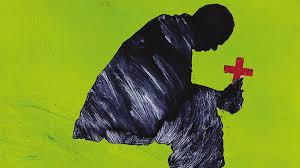
Go Tell it on the Mountain
“There are people in this world for whom “coming along” is a perpetual process, people who are destined to never arrive.”
If Beale Street Could Talk
“Neither love nor terror makes one blind: indifference makes one blind.”
There’s not much more that can be added to the discourse to what a talented writer Baldwin is. He’s one of the most accredited black authors. Whose own fame was accelerated by his “ahead of time” and stereotype breaking eloquent and articulate speech during interviews. Taking all this into account it’s important to note that his most famous work is often misunderstood and the significance is often not fully grasped by readers despite its infamy because readers don’t understand the background through Baldwin’s other works.
Baldwin’s character studies are often talked of in reference to Giovanni’s Room and while this is his most notable piece of work for good reason Go Tell it on the Mountain stands as a more poignant character study for an introduction to Baldwin. A lot is said in passing in Giovanni’s Room that is said more in the structure of the story and more aggressively in Go Tell it on the Mountain. The level of emotion that Baldwin fits in between two lines is striking in this novel in a way that is comparably different to his other works. He writes each paragraph as if he only has those lines to express the psychology behind his characters. The setting of this novel also stands out from his other works. Not necessarily the location, which is often Harlem, but the mental characterization of our character stands out as a clear psychological study against his other worlds plausibly because it’s semi autobiographical. This being his first published fiction work also might feed into why we see a very earnest first person narrative. The writing is intricate and feels as personal as a diary. On top of this the studying of a young black boy versus his other novels other characters leaves an interesting dynamic, instead of growing through just experiences that are plot driven we see our character growing up physically and mentally and challenging his personal, societal, and familial ideas. I’d argue that anyone interested in Baldwin needs to start with this work because it fully launches you into a sort of background into all of Baldwin’s other works.
The storytelling is often what’s referenced most in Giovanni’s Room and I think this is largely in part to the ahead of time story exploration of a homosexual relationship set in Paris, unlike his other novels set in Harlem or the larger New York. Story telling and character building are obviously Baldwin’s strong points, but in If Beale Street Could Talk we see an entirely different side to the writer that is Baldwin. Having read all three of the aforementioned books in a row this year it’s clear as a reader that Balwin’s range is insurmountable. While almost every novel is a clear character the study the way in which he chooses to go about this is unlimited. That’s why I’d also recommend If Beale Street Could Talk as a starting point with Baldwin. It’s an emotionally disastrous tale of a young couple which ends realistically incompletely. It carries emotions that most modern novels can’t attempt to convey. While the storytelling in Giovanni’s Room and its pure emotion is often most praised I think this novel does a more accessible and aggressively moving job of getting its point across. This “point” can be taken many ways, but the novel is clearly tackling police based discrimination in its main plot points through which it tackles black family archetypes and stereotypes, the criminal justice system, and the growing up with a father archetype in black households. While Giovanni’s Room is clearly brilliant, the way If Beale Street Could Talk communicates inadvertently and straightforwardly to the reader is much more moving as an introductory read comparatively. Likely because of the themes of familyhood and discrimination, but beyond this the novel feels so clearly poetic with its emotion. In fact it’s the one Baldwin novel I would argue is a necessary read for everyone. It continuously showcases that Baldwin can also write out full storylines for black women as equally as he can black men. He knows how to truly flesh out a character. This is also Baldwin’s shortest novel of the three sitting at barely over one hundred and thirty pages and still he is able to fully explore this plot line and all the sub messages astoundingly competently.
Now I would like to give Giovanni’s Room its flowers. I definitely think its Baldwin’s most fleshed out relationship between two characters and it feels deeply personal in a seriously moving way similar to the Go Tell it on the Mountain. I think Giovanni’s Room is also more clearly matured than the other two novels. There is a distinctly different atmosphere to the writing and the setting outside of Harlem. I also see this as a symbolism of a different type of story, but this makes it all the more important that this is not the first Baldwin novel that people read. In order to fully grasp the dynamic between the characters and the emotional story telling it would be more useful and all encompassing to read the other two novels firstly. Even with beale street being published after Giovanni’s Room it still lacks the maturity of Giovanni’s plot and this is done purposely because Baldwin often uses Harlem to express youth and exploration in his stories calling back to the black renaissance. The change in setting is clearly purposefully done to show that Giovanni’s Room is a different world for Baldwin and in order to truly grasp the significance of this world and character study we must start where Baldwin started. In Harlem with If Beale Street Could Talk and Go Tell it on the Mountain.
Written by Eva Hamilton. Eva Hamilton is a freshman at GW studying data analytics with a concentration in physics and minoring in public policy. She loves to read, lift, and explore astrophysics content in her free time.
 Vocal Chords Journal @ GW
Leave a comment